Remote Solar is No longer a Novelty
If you own northern property, manage construction projects, or are looking at green power and EV charging solutions, you’ve likely run into the same problem. Needing reliable power, exactly where you need it, without overbuilding or overcomplicating the solution.
Not long ago, remote solar was a workaround.
There was no real expertise in back country solar or cabin cottage off grid living, because there wasn’t an industry yet. People did what they could. You’d see panels mounted on homemade frames, batteries sitting in basements, and an assortment of wires that made sense only to the person who installed them.
It wasn’t uncommon for a complete solar system to be anything but complete.
Most setups were built over time, used panels here, questionable components there—until something resembling power came together. Efficiency was low, safety was a concern, and reliability was hit or miss. And if something failed, finding someone to service a northern solar setup remotely was nearly impossible.
But expectations have changed.
Power Is No Longer Optional
Today, off grid living doesn’t mean sacrificing functionality.
Whether it’s a homesteader, a contractor running construction portable solar, or someone managing a cottage solar setup, the demand is the same. Reliable, consistent power without constant oversight.
People are working remotely. Running the internet. Charging tools, equipment, and now even exploring EV charging options in remote areas. Power isn’t a luxury anymore, it’s infrastructure.
And that’s where older systems fall apart.
They require too much attention. Too much adjustment. Too much risk.
The Move to Plug and Play Solar
What people are turning to now is simple: plug and play.
Not in the gimmicky sense, but in a real, deployable way. A system you can bring to site, position, and use immediately. No piecing things together. No rewiring. No troubleshooting in the field.
A true all in one solar system.
That’s where portable solar has evolved. You’re no longer dragging components out to a site. You’re bringing in a complete solar system that’s ready to perform.
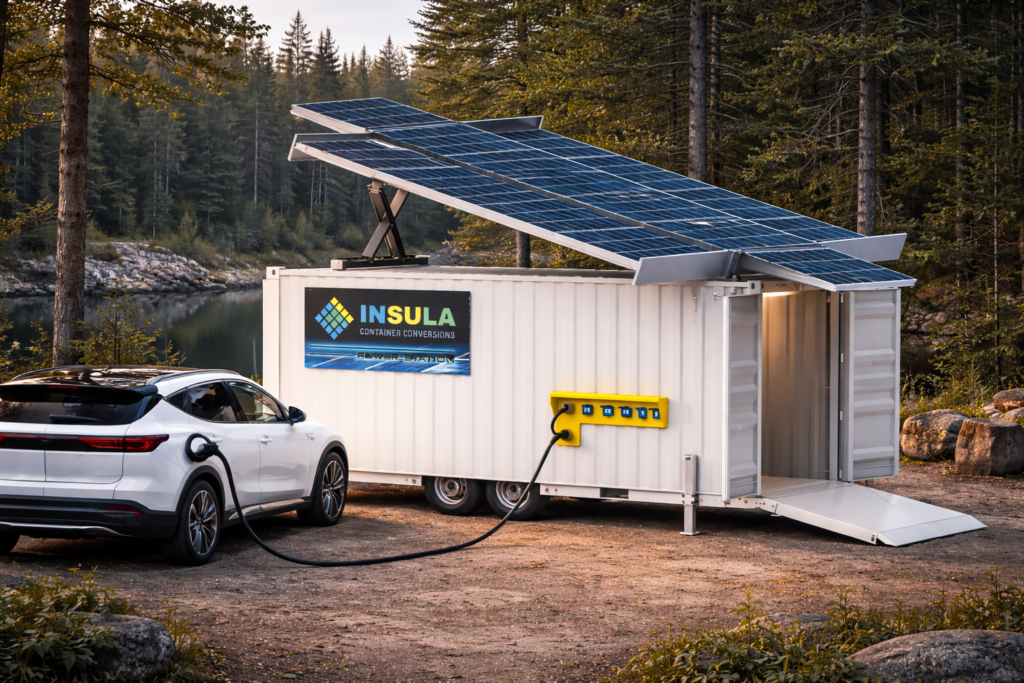
In this case, a 5500-watt onsite solar system designed to deliver consistent output whether you’re powering a remote cabin, supporting green construction power, or setting up a temporary solar generator solution.
The Platform Behind the System
What makes this work isn’t just the electrical side, it’s the structure it’s built on.
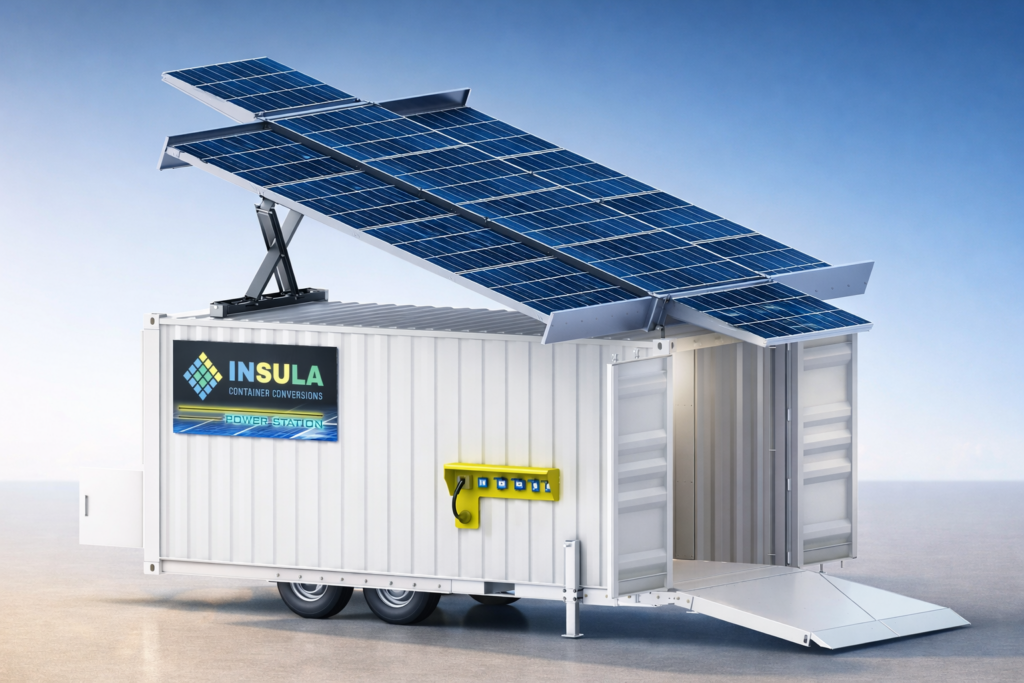
The Insula Solar Array Platform is what holds everything together. It’s not the solar system itself. It’s the engineered framework that allows any system to function properly in real-world conditions.
You can mount it on a container, a container trailer, a box trailer, or place it directly on the ground.
That matters.
Because in Northern Ontario and similar environments, you’re dealing with rock, uneven terrain, and conditions where permanent installs just don’t make sense. Traditional posts are difficult to install. Wooden structures don’t last, they rot long before the panels do.
This platform eliminates that entire problem.
It creates a stable, transportable base for your portable solar system. Whether it’s for rural power solutions, a job site, or green power living at a cottage.
Built to Move, Built to Last
Most fixed systems lock you into one location.
This doesn’t.
A portable system means you keep your assets. You move it when your needs change. You bring it in for service if required. It adapts with you, whether you’re scaling a project, expanding a property, or shifting locations entirely.
Engineered for Canadian weather. Tiltable for maximum solar capture. Collapsible for transport. Hydraulic options available for easier deployment.
It’s not just a mount, it’s infrastructure for a green power system that actually works in the field.
A New Standard for Remote Power
Right now, most options are still stuck in the past, either makeshift systems or fixed installs with limitations.
But the demand has changed.
Businesses want reliable construction solar power. Property owners want dependable cottage solar. Operators want flexible portable chargers and EV charging options that don’t require permanent builds.
This is where things open up.
When power becomes mobile, reliable, and predictable, more locations become viable. More projects make sense. More clients can be served.
That’s the real takeaway.
Remote solar isn’t experimental anymore.
It’s not a side project.
It’s a deployable solution.
And once you start thinking of it that way, you begin to see how much further it can take you.